S3 E7: From Office Burnout to Galloping Racehorses: Courtenay Brown's OTTB Journey


What happens when you stop playing it safe and finally choose the horses?
In this episode of OTTB on Tap, we sit down with Courtenay Brown, who went from a stable remote career to riding racehorses full time. Her path is anything but linear, and it will hit home for anyone who has ever felt stuck in a job while dreaming about being at the barn.
Courtenay shares how she grew up around racehorses, stepped away for years, and came back to the saddle later in life. She talks about producing her own OTTB to the upper levels of eventing, getting laid off, and making the decision to lean into horses instead of rushing back to another desk job.
We also get into what it is really like working on the racetrack. The early mornings, the learning curve, and the moments that made her fall in love with it. If you have ever wondered what your OTTB experienced before you got them, this conversation gives you a rare inside look.
We talk about her horse Bam, found through CANTER with a bowed tendon and developed into an upper level event horse. And we get honest about shifting priorities, stepping back from competition, and what it looks like to just enjoy your horse.
This episode is for anyone thinking about a career change, anyone deep in the OTTB world, and anyone who knows that pull back to horses never really goes away.
S3 E7: From Office Burnout to Galloping Racehorses: Courtenay Brown's OTTB Journey (Transcript)
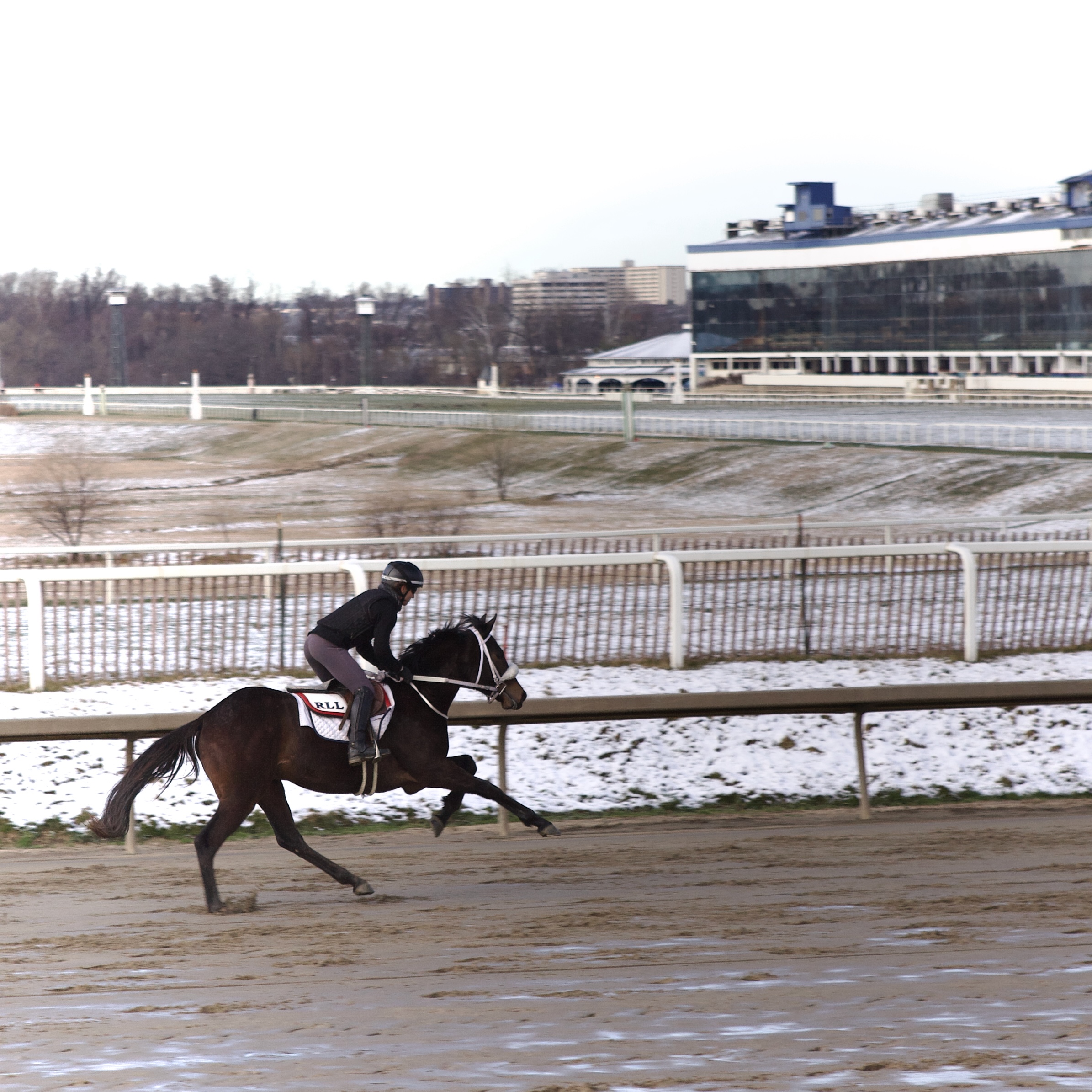
[00:00:00] Welcome back to OTTB on tap. I'm Nev, and today we have a very special guest host. Hi, I'm Stephanie. Hey Nev. What's on tap today? Today we're sitting down with Courtney Brown, who went from working a remote job to riding race racehorses full-time, all while producing her own upper level event horse.
But that's only the tip of the iceberg. Today we're diving into what happens when you actually choose the barn over the safe plan. I discovered Courtney on Instagram through her two accounts. We will put these in the show notes, which is at ride race horses with me and at two ex racers and reached out to see if she'd share her story with us.
Courtney, thank you so much for joining us. Oh, thanks. I'm really happy to be here. Thanks for having me. Yay. So take us back a little bit. Can you just tell us about your background, your early life with horses and early career path? Sure. I was a horse, crazy little [00:01:00] girl. I'm sure a lot of people can relate to that.
Actually, the first time I fell off a horse, I was six months old. And my mom thought she killed me and she said she picked me up and I was like, re I blood on my head and I was reaching out to get back on the horse. Yeah that's me. But I was involved with racehorses from a pretty early age because one of my mom's friends who had a racehorse farm called her up, called my mom up when I was about eight, saying that somebody had dropped a pony off there and if I wanted, I could come and ride it.
But I had to do some chores. So I worked at the barn at a racehorse training facility when I was eight. I filled water buckets. That's amazing. Yeah. I filled water buckets so I could ride strawberry. And I like bombed around the infield on her the first summer with no saddle. 'cause I we didn't have a girth small enough, I think was the reason.
I'm not sure. Yeah. And then, I kept going back. And, then I rode, a hony that didn't make it as a racehorse. And then I started walking, leg up racehorses. And then by the time I was 14 I was galloping. Which was really awesome. And I think like after that I, and [00:02:00] then I had some experience with off track racehorses through that through that job.
And retraining for show horse careers. This was the nineties, so everything had a show horse career after being a thoroughbred race horse. But yeah, and then I went to university at the University of Virginia and so that I could ride 'cause there's good horse stuff down in Charlottesville.
And then after I graduated college, I took a step away from riding mostly. 'cause like my first job I was working at a radio station for $20,000 a year. I was like, oh. I guess I'm not gonna do this for a while. And I remember thinking, I can come back to the horses when I have a real job.
Sure. Yeah. And so 12 years later I finally had a real job. I got back into riding about 10 years ago.
When, I had that real job with an actual salary. And and my mom was turning 70 that year and wanted to go on horseback safari in South Africa. And I had friends. Yeah. And I through Oh my gosh, that's amazing. Yeah. So I had some good friends who were South African, and so I like planned [00:03:00] the trip and including the Safari, and I thought man, I gotta find a, I need I can't just show up, I need to ride.
And my intern at my job at the time she had invented up to advanced and she was rehabbing her advanced horse from a dispensary injury. And she's oh, come, we'd already hit it off. She's oh, come ride Wally. And I went and rode it. I was like, oh my gosh. It was so fun.
She's you should get into venting. But in the meanwhile I have a friend with a horse that needs exercising. So I started riding that horse and then, started. So it's a slippery slope. Yeah. Total. Oh yeah. It was a slip and steep slip and slide. Wow. Okay. So you didn't even have any experience of venting, you just had done.
The track stuff. That's amazing. Took that break and then, okay. Eventing and I showed hunters. I showed hunters. 'cause that's what you do in Charlottesville. I showed hunters in college. I see. Okay. And I think if I'd found eventing, there was eventing there, but not at, not through the university.
I feel like if I'd found eventing, I probably would've invented from then. But I'm glad I didn't because, my path led me to where I'm so wouldn't change it. [00:04:00] Yeah. That's great. Thanks. So at what point did you feel, like this isn't it anymore when you had that kind of desk job and I know you said you had 12 years, right?
Where you were working and doing all of that, right? And then the horses came back into your life. Yeah, I think it with my job I think I'll probably, a lot of people who have a desk job can relate to the middle management malaise. I like fell out of love with my job when I got promoted into middle management, into the director level.
Then I loved my job at until then, and then I'm like, oh man. So that's all I'll say about that. But it was like another probably four years and to be clear, I didn't choose to leave. I got fired in July of 2024. I got a really nice severance package and I had seen the writing on the wall for a couple years before then because, change in leadership, three different bosses in the span of a year and a half people didn't know what to do with me and my skills, that kind of thing.
And I'd had a lot of promotions before that, so I knew I was expensive. And so I made the choice and I can [00:05:00] see where this is heading. I'm gonna ride it out. And so I did get a nice severance package and then, and that was in July of 24. And I thought okay, and worked in the progressive, I worked in a climate advocacy nonprofit.
So in this sort of progressive space. Okay, so my plan was to volunteer for the election and then after Kamala Harris became president, I would find my next job. And oh, wouldn't that have just been the most ideal circumstance of all time? Yeah. So anyway so when you got your severance and, things didn't obviously pan out the way that I think a lot of us would've loved.
What were some of the steps that you started making towards doing horses full time? So I first I was like bewildered for a couple months. 'cause now in retrospect, I can see, could see it coming, but at the time I was like, why didn't anybody tell me I sucked at my job? I had a very hard time with it.
It really affected my confidence. I just had no idea what happened. Yeah, that was a theme in that year, just like I had very low confidence on my horse, in a lot of ways. But in the span of about 48 hours, I [00:06:00] both got a call from somebody who rode with a five star inventor who I had worked for the winter before in Florida I was in Ocala.
And so I had worked for a, an upper level event or riding or horses doing weekend chores. So Shannon called me September of 24 and was like, here, you don't have a job.
Do you wanna come up to Pennsylvania for six weeks and ride horses? And I'm like, yeah. I do. Yeah. That's awesome. And around the same time, somebody I've been, 'cause I've been lightly networking and, working on figuring out my job search. Somebody called me and was like, oh, do you wanna do data analysis, freelance for a campaign?
And I'm like, eh, I got something else I'm doing that I'm not gonna get paid for. I'm gonna go do that. But it's so much more fun. Yeah. And I, but in, in retrospect, that was a critical juncture in my career path. Sure. I made that choice. And I had been thinking like, oh, I just need this is my sabbatical.
And it was really just like obvi. I always choose the horses. I did that during my job as well I did that, in a lot of ways. Yeah. And that was a great experience. 'cause I learned a ton. I still have scars on my butt from all the trotting I did . Gosh, [00:07:00] listen, I quit my full-time job when I was 36 to be a full-time working student.
Okay. And yeah. And yeah, I feel like you and I have been on a kind of a similar path. Similar path, except for you are a lot more successful than I was but yeah, no, it's like I was just like, oh, yeah. I have this great job. I've worked here for 11 years. Why don't I just quit it and go work for free six days a week and, yeah.
It's fine. Seven to seven, seven days a week, whichever it, or six, whatever it is. Yeah. Yes. With an hour and a half commute, it's totally fine. Oh yeah. Wow.
But that's great. Wait, now I lost track of the question. I'm sorry. Yeah. Yeah. Its, so you were, you had scars on your butt from trotting, et cetera. Yeah. Yeah. And then well but the bigger picture question. Yeah. Is it like, how so you're finding yourself you're on the track, right? Yeah. Now at this point, and you're not getting paid yet, right? You're just working or Yeah. Helping, getting rides or whatever right. [00:08:00] At this point. Yeah. At Bucks I I was basically a working student 'cause I, I had my horse and I had got housing, and when I was up in Pennsylvania and then I came back down.
So that was just for six weeks. And then at the end of it. He's do you wanna keep working for me down in Ocala? Great. I'm like, sure. I'm looking for a job. And and then it just turned into working more and more and okay, like failing at my job search because I, 'cause there was like one where I'd gotten a phone screen.
I got I had a good, I was doing okay in my job search. I was getting phone screens and I was making it to the second and the third round kind of thing, and then I'd be exhausted for the skills test. And I just kept choosing the horses. Yeah. So then I got to the end of March which is pretty much the la like the end of when you wanna be in Florida.
It was like, I gotta get outta here. I'm like blowing through my severance. And so I call you feel like it's super fun working for free, but yeah, like I can't, I, yeah, eventing, eventing is an awesome sport. You can't it's not, I don't know how it's sustainable. I don't, I, I don't know either.
There's just, [00:09:00] yeah, there's just not that much money in it and it's, you just get works to the bone as a result. But I learned so much. I wouldn't be doing what I'm doing now if I hadn't had that experience. Sure. Yeah. Wow. And so that was just March of this year, so we're just or last year? March of, yeah, March of this past year. Yeah. So then I'm from Maryland, so I called, my mom was like, can I come back? And my mom has a little t so I brought my horse and I'm still in my mom's. Oh, perfect. This is my mom's basement. There's some way of That's amazing. I love it. Yeah.
And yeah, my horse was basically in the backyard. And then, after shortly after I got back up here I was still looking for my job. I pretty much was like, I need to get a new job by July, like one year after I lose my job. So I was trying to be like hardcore about my job search.
But then meanwhile some friends who train race horses off their farm were like, oh, we need help galloping at the racetrack. Do you think you could come help? And I paused about it. I'm like, oh man, I don't know. That seems like it might take a lot of time. And I remember growing up, 'cause I think there was this period of time where I did really wanna go, like [00:10:00] the racehorse route and my mom shut it down.
Oh yeah. Oh yeah. Big time. And it was just kinda it's unsavory. That's not a safe place. That's not a good place for you. You need to get an education. And so I think somehow, I internalized that and was like, oh, I dunno about gonna racetrack. And but I went and the first time when galloping, I was like.
This is beautiful. This is incredible. Yeah. Yes. I'm coming. Anyway, that was last year in May. 'Cause I remember going up to Pimlico to get my license because Oh, amazing. I had to go to the racing office. So it was during the previous meet that I went and got my license. Wow. Just amazing.
So suddenly you're riding race horses, right? So what was that first week like when you were doing that? So I did get a slow lead in, I went up once a week with my friends. That trailered in, I was going up there once a week and, taking horses to the gate and breezing and stuff.
And what I found myself doing [00:11:00] is I kept looking on Facebook. 'cause I'm Facebook friends with the person I got my own horse from nine years ago. I'm Facebook friends with them and a few years ago I'd seen them post we're looking for an exercise rider. And so I kept looking, I was looking at their page every day to see if they were hiring somebody.
And I'm like, this is absurd. I have their phone number. I could just call them. Yeah. So I did. Yeah. But sometimes making a phone call is the hardest thing you can do. Oh, yeah. No, and that's a theme still now, reaching out to people. I just want people to see me ride and be like, oh, come ride.
But yeah, so I called them up and they're like, actually yeah, if you could come on Tuesday. So that was in September. I went on Tuesday. So thankfully I'd had the summer of going up, roughly once a week sitting in kind of thing. Yeah. And getting the feel for just just getting my confidence that I could do it is mostly what I needed to do. Yeah. And understanding a little bit about how things were and meeting some of the outriders and stuff. Yeah. And then I also love that you're like, yeah, I was just going up once a week and going in and out of the gate and breezing and it's aren't those two of the hardest things that [00:12:00] you could be doing at the truck?
Yeah. Yeah. And she's just yeah, i'm like, thought you were gonna be like, yeah, they lemme jog a couple, or they like, tanner a couple like, or whatever. You're like no. They were just like, yeah, just go up and do some gait stuff and just breeze it up. Yeah. I think I bring a lot of experience being calm.
Sure. Yes. And I think that's what that trainer said. It was just like, oh, you're really calm. Yeah, if I'm freaking out, what am, why isn't the horse gonna freak out? Of course I'm calm. Like otherwise, 'cause they cue off us so much. So just that sort of experience of just okay, dude's kind of put you in.
Yep. Here we go. And yeah. That's great. Yeah. That's really good. Yeah. But yeah, my, but the first week, like still the first week that I was on the track every day, that was still, I, that was the first time I jogged and I'm like, wait, you jog here? Like, how am you supposed to jog? And the first one I jogged, I like, it went after, it was like on a Wednesday.
'cause I'd started on Tuesday and then the next day I [00:13:00] galloped two. And the trainer was like, oh yeah, come back tomorrow. I'll have more for you to ride. I'm like, awesome, great. This is awesome. And I come and I get on one and he is jog her and you're gonna have to go the right way.
AKA counterclockwise. 'cause the gate's up and you can't, at laurel, you can't go wrong way all the way around when the gate's up. See, because you can't cross the shoot. It's a safety thing. Yeah. So I had to go right way and jog and she did not wanna jog and there's people coming by and she's hopping up and down.
And I started clucking at her because I was like, keep moving. And then I saw the outrider that I knew and I was like, Eddie, I'm scared. You're like, and he's okay, stop clucking. Oh, that's a good idea. Thank you. And I realized anyway, we made it around and then four months later and that same barn I heard oh yeah, she doesn't jog.
I'm like, doesn, what was I doing on this Philly that doesn't jog going right way also, thanks for the heads up day two. Yeah, no, totally. I've had a few thanks for the heads up moments. What the heck guys. It's funny 'cause I was just about to ask you if you had any funny stories from that time.
But one of the things I love about following Ramon's videos. [00:14:00] Is that he often will say I'm on this really tough horse and I'm supposed to just be jogging it today, but this horse does not want to jog. And the horse is just bouncing up and down. And he's just so funny 'cause he's like a SMR for I'm like, could I just put him in my ear when I'm riding?
And my horse feels a little bit wild when he is just easy mama. I know. Okay. I love him. It's so great. Yeah. I do a lot of singing. Yeah, and there's been times when I'm like, there was one time when I had to do a full on when I had five to jog and the temperature dropped I think it dropped like 50 degrees overnight. It's dark. Oh my God. And I was just like, I wasn't even singing. I'm like, let's imagine we're on the beach, we are getting our nails done. It's so hot and there's a margarita. And actually 'cause I'm like, I need this because I was like, oh, because it's just making you breathe.
Yeah. No you can feel they're just like, probably like little coiled springs. Yeah. Yeah. And timed. Wow. So what surprised you most about working on the track? Was [00:15:00] there anything that kind of stood out to you in that? Not even in that first week, but I think going back to when I first got there and I was like, this is awesome.
I feel like I had internalized this sort of mythology of oh, the track is can be an unsavory place and people, don't really treat the horses right. And all this. And I have found the opposite. It's beautiful. Like the horses, especially the horses that get there and race, they're there 'cause they they have a work ethic, they're psyched.
They want it, it takes them, they pick it up really fast 'cause they're like, oh cool. I get to do something fun. And so yeah, it, I, at first I'd thought of it as a oh, this is just I just need to make some extra money right now because I'm like running outta money and horse people are paying me, so I'll go to where horse people are paying me like that.
That's all it was. Sure. And then and then I've just found so much more in terms of feeling like I can make a contribution to places where I am and, making relationships with the horses and that kind of thing. And the people are great. Yeah. One thing I guess I could mention that I remember noticing and really enjoying at the beginning as I was like, everyone [00:16:00] on this track is in a good mood.
Everyone was just like, Hey, singing just and coming from an office environment or even from a really stretched, thin eventing environment, everyone was like, I used to that. Yeah. And it was just like, wow. There's like a lot of positivity. And so that's what inspired me to get the camera between it being beautiful and I was just like, there's so much positivity here.
I'm like, I'm just gonna get this camera whatever else I can do with it. Yeah. I love that. Yeah, I love that. That's amazing. I think, probably. Everyone really wants to be there, right? Working with horses is not the easiest, you have to love it. And that really came across, which is really cool to hear.
Oh, thanks. It also reminds me of, I follow a couple of different girls throughout the world, primarily the uk. There's one in particular, her name is Lily Lifts, and she's like a power, not a power lifter, but she does a lot of strength training videos and she just sets up a camera every day that she is working out in the gym.
And one of the things that I love is her interactions with people that are at the gym with her. Like these Jim bro dudes and these tough looking girls and this and [00:17:00] that and all of the experiences that she has where everyone, one is so psyched to be there and two is so supportive. And I think, yeah, it's really nice to know that like this, like Boys' World, male kind of.
It when it is male dominated, industry is a more welcoming place than like we would maybe like to believe. Yeah. It really, I think that's a great way to put it. I agree with that. Was there anything specifically about your previous riding experience that kind of transferred over or did you have to learn this whole new skillset and muscle memory?
Both. Both. And I think I'm lucky that I had that experience in my teen years galloping, which I mean was basically, I remember sometimes hiking my startups up way too high and falling off. So it was like this time around. As Ramon always says, the longer you ride, the longer you ride.
Yeah. [00:18:00] Yeah. And so I actually I took that approach at the beginning and and now I do put my stir up more because I've learned, I'm like, okay, everybody's. Body is a little bit different. The way one person gallops isn't necessarily gonna be the way that I can gallop.
Absolutely. Yeah. Just 'cause my geometry's different. Yeah. And so yeah, I think there's I think everything with horses, like that's the thing we love about is you constantly learning. Like you can spend your whole life learning. Yeah. And so I do think I've applied a lot of my prior experience and lessons.
One thing that works really well, especially when you're trying to get them to jog that people don't understand as much or don't get trained as much on the track, is this concept of pressure and release. And the horse learns what you want them to do when you release the pressure. Most of the time at the racetrack, the times that the horse gets the pressure released is when it's going, when it's breezing.
'cause usually when you're galloping it's like you're not breezing and they're like, what, wait, can we go now? Can we go now? And you're like no. You keep keeping it easy today. Jogging, same thing. They're like, can we go? And so that, that con and I see a lot of riders. [00:19:00] Or I know Riders will just they're just putting the pressure on all the time, even when they're jogging.
And so that's something that I'm lucky to have, through other kinds of training. Yeah, absolutely. Understanding of when they're doing what you want them to do, just make it like sunny, happy days off, take off the pressure, right? Yep. Exactly. And the horses are interesting.
Remarkable about understanding that. Oh, they're smart. They're, yeah. They figure they're smart. Yeah. And I think that like when we talk about this all the time with getting horses off the track, that's one of those things that you can just lean into that. They really fundamentally understand that, and you can count on that in a small way. Yeah. So you've touched on this a little bit, one of the things that stands out with you in particular is your background in health and fitness. So obviously I think for most people they're not gonna go from a desk job to galloping horses at the track.
But can you just fill in our listeners with your. Background in. And you were a professional cyclist, is that right? I was, yeah. Yeah, I was a cyclist and [00:20:00] and then a triathlete. And it's so annoying. I feel like sometimes when I talk about my background, I feel like Elle Woods from Legally Blonde because I've done all these different things and it's just I just woke up and thought I would go Gallup race horses today.
I just woke up and thought, it's like, it's so annoying. What? It's hard. Yeah, no totally. Yeah. Yeah it's, yeah, I feel bad, but but yeah, no, I, when I moved to San Francisco shortly after I left the radio station job in, in Charlottesville. And I worked at a law office and coordinated with bike messengers and I was like, maybe I'll try cycling.
And then I was like, maybe I'll try bike racing. Having lived in Philadelphia for a really long time, I was friends with a ton of bike messengers and I rode a fixed gear bike when I lived in Philly. And then I got into cycling quite a bit. I had a road bike for a long time, but I did some 90 mile rides on my fixed gear around Hilly Chester County.
Wow. Like a psychopath. But no, when you hang around that group of people and I did some alley cat races in Philadelphia and oh my god, I did an alley cat in San Francisco. Yeah. That's so cool. Yeah, it was just, [00:21:00] it's so fun. It's so fun. You just you get sucked into the culture much like horses, but totally.
Yeah. Like bike po. Yeah. The messenger culture is really fun. Oh yeah. I actually, yeah, one of my, one of my best friend is one of the best bike polo guys in all of North America. Oh, fun. That's so funny. I have a bike polo scar. She can't really see anymore. Yeah. No it's a fun, I actually, I raced in the, they, a long time ago they had this race, the Liberty Classic, that was the women's version of the, I forget what it was called for the men.
But we ride up the Manny on wall in Philadelphia. Oh yeah. Yeah. Oh, that is brutal. That's a brutal time. It was a little, yeah. It was I'm glad I did it. But yeah, and then I started racing triathlons. And and I think, the thing I remember about both of those is , whenever I'd go past horses, I'm like, what am I doing on this bike?
But, I'm like, I'll be back eventually you guys. But I always knew it would have a time limit to it, but it was a good way to learn to train yeah. And to learn about physiology and that kind of thing. So I learned so much from all of those stints, and then after that I ran [00:22:00] and when did, was into climbing for a while.
So yeah, I have a variety of sport backgrounds. Yeah, it really sounds like you've done a lot. And I was reading this one article about you and it did talk about the rock climbing, and you were saying that kind of body awareness was really important and that really helped you maybe with your riding.
Can you talk about how that kind of works together? Oh yeah. I love that. Yeah I do think that's true. Because so much of riding, when we think about being in the saddle every horse is different and we're communicating to the horse, we really have to be aware of oh what, what do they think I'm telling them right now?
And so to me that's like the body awareness aspect that's really important. And I've found it like. I think at the racetrack where it comes into play I've been galloping there for six months. I haven't fallen off yet, and I know I'm gonna fall off at some point. Everyone falls off.
Don't chase yourself. No. I've said this a few times already. I'm just like, I haven't fallen off yet. It's gonna happen. I know it's coming, like I know it's coming, but I have, I'm like, I'm, I stick pretty [00:23:00] good. I've had a couple times where somebody has fallen off. I've gotten a phone call.
Are you okay? I'm in my car making a TikTok. Like stuff is not me. But but yeah, I think rock climbing is a good, there's different kinds of coordination, sports and stuff, but it gives us like, anything that sort of gives us the ability to react is also I think, really important in riding.
And especially on the racehorses. 'cause there's just so much going on out on the racetrack. And, the horses are really good, but, considering but but yeah, there's just it can be a lot happening and sometimes you go out there and it's just there feels like there's a chemical reaction happening right now.
And that can happen at a horse show too. I've been in warm up. Warm up can warm up where it's yeah, you're like, I need to get outta here immediately. And yeah, you can see it coming. But yeah, I think I like having fun cross training kind of stuff to do.
I don't climb as much as I, I did, I climbed a lot in Florida actually, 'cause I found a great gym in Gainesville, but right now I don't have access to one that's anywhere nearby. Yeah. Oh my gosh, there's a ton up where I live, but I'm probably pretty far from where you live in Maryland, so [00:24:00] I'm in pa.
But leaning into the fitness aspect of this. I always talk about that nothing really gets you fit for riding, like riding Does. Do you feel like that's true or do you feel like there's other things that you can do to really, obviously being fit in your normal life, in your regular life outside of riding is important, but I, to me, it never feels like no matter how much I can run every day or how much strength training I'm doing, really time in the saddle is the only thing that equalizes your fitness for being a rider.
Yeah, I don't necessarily disagree with that. And I think yeah, time in the saddle, but we can supplement that in ways that like, we all definitely not we all, but we should. And I remember when I was like really serious about eventing, hearing some different research about actually this isn't, you shouldn't be running if you're an upper level inventor.
You should be doing your strength training and your core training. And I'm like that's good because my body doesn't wanna be doing endurance training any, or cardio anymore. After all my years of [00:25:00] cycling and running, it doesn't actually help. Help me to be doing those.
Yeah. For the race horses, it's the same kind of thing 'cause there's lots of upper body strength and sort of that I think like reaction time. But I do yoga pretty much every day. So there's lots of stretching and that kind of thing. Yeah. For the stretching and then the flow and the core, to me, the core is yes is really important.
But I have coworkers who, who are like, oh, I need to run. If I don't, do my run, then I can feel it when I'm breezing that I've lost my wind. Okay. Yeah. So it just I think it depends. I think I'm lucky because of my decades of being an athlete, I carry more fitness with me Sure.
From that than, but I think to your point that people don't realize that your wind is affected by your core strength. If you're struggling to find your balance just as 0.0, like that's like your zero point of oh, I'm struggling just to even just stay centered in the saddle.
You're going to use your cardiovascular energy just to maintain, trying to find that. So I feel like if that's [00:26:00] strong and you can at least sit and feel balanced and comfortable I feel like your cardiovascular health can be improved by just physically a little bit more fit and have more, and having more core strength.
Yeah. And the horses notice it too, they do. Yeah. Even just the tiniest bit. When I'm jumping my horse sometimes I'll be like, oh, I think he got that back rail. 'cause I lean forward just the teeniest bit. Yeah. Yeah. Just like any of anything, that's our change in balance.
They feel it. And the same with the race horses. If you're able to just really sit, like just sit, then you know, that gives them the, they have the room to just be like, all right, yeah, here I go. As opposed to if you're just woo all over there what's going on up there?
Yeah. For sure. Yeah. Yeah, that definitely makes sense. So even with that background in fitness, there had to be, some differences that once you started galloping did you feel like your physical fitness had some gaps there that you were like maybe I do need to work on my core a little more, [00:27:00] or my upper body strength, because, now I'm galloping and doing something different.
The only one I would, or not only one, but I did start I think probably the first three months I wasn't doing anything else because I'm like, oh my God, I'm getting up so early. And then I still was having like other horses to ride because had some freelance show horse rides in the afternoon and my own horse and stuff.
And then by the time I get home I'm like, I can't do anything else. And then once I embraced the early morning, the okay, training starts at five 30, like I can get, and I had been like getting up at four basically because I, from my horse showing days, I'm like, I cannot get up before four.
That's inhumane. Like whatever. What difference does it make? So now I get up at 2 45 or three and then I have time to do my yoga. And it's just, that's why I'm like ready for bed right now at six 30. And because I did feel a little bit like, some, it, a lot of, in my quads, especially now I've started putting my stirs up higher.
'Cause I think it does really help with holding the tough ones. If I'm out there jogging and my stirrups [00:28:00] are long, and then the, this happened to me the other day. The trainer was like, actually, if you wanna gallop in the last little bit, I'm like, oh God, I hope we can pull them up, like massage stirrups right now.
And but yeah, so the quads and stuff, but I pretty much do everything at home. Which means doing a yoga routine on if I can't find it in some form of a strength building yoga. I, that's, it's too much for I can't, I haven't been able to incorporate that into my schedule.
But I do find stuff on YouTube. It's got a lot of chair pose and stuff that's like really building, because I, to me, that mimics the feeling of being in the saddle, with my structural shore. Just okay, I'm trying to do chair pose with my femurs as parallel to the ground as possible.
Yeah. Oh, wow. Yeah. I wanna switch gears a little bit because your story about finding your current upper level horse is, I think I, we were saying off mic something that when I was reading about you, I was like, oh, she's so our kind of girl. She's just so let's [00:29:00] talk about how your horse, BA messenger, AKA bam Correct.
Came into your life. Yeah. I love talking about Bam. He, yeah. So nine years ago I got him, he was a cantor trainer listing from Laurel. And after I mentioned, that I'd started riding again about 10 years ago. And and then when that, when I started just shopping, 'cause I had a desk job, so I was at a computer, I'm like, oh, I'm just looking into, a horse, like if I, in case I can get a horse.
So I was looking, I found the Cantor website and my now ex-husband. Oh, it's just all a bad idea. Oh, totally. I's I start, yeah. No, really. And I'd shopped, I had all these horses that I had saved and everything and was looking at, and then when I saw his ad, I'm like, oh God, that's my horse.
I get so emotional still. Oh, so much. I love it so much. So I was like, I just love him. And then I looked and the year before, or maybe a [00:30:00] few months before I had been home for Thanksgiving or something and went fox hunting with the friends actually that I was going up to LA with last summer, once a week.
And they had, I sat on this horse that was by Smarts Strike, and he was there as a re like a retraining for retraining. And I, rode in Fox sign like, oh, I really, I like this horse. And so I've had that horse in mind, that stallion in mind, as something I'd be interested in.
And then, when Googling on like the Chronicle of the Horse forums oh, everybody likes AP Indie. And so I looked at BA's pedigree. I'm like, oh, is Grand Sire or Smarts Strike an AP indie check. And then I read the ad and it's call Hugh McMahon. I'm like, oh, I know Hugh. He used to be married to a friend of mine, and they, oh my gosh.
Came over. He came to our house at Christmas when they were both jockeys and drank red wine and ate a carrot for dinner. So I, finally was able to get in touch with Hugh and he's oh yeah, you can have him, he's a giveaway because he had he had boat attended Likeactually.
That's perfect for my timeline because I'm not ready to actually have a horse right now. I need to get my things organized. So yeah, he. And I sent a friend [00:31:00] to go and pick him up who was like, aren't there horses in Canada? 'cause at the time I was living in Canada with my now ex-husband, and I'm like, yeah, but not that horse, so can you please go pick him up for me?
Yeah. And then I turned him out for six or eight months, I think eight. It was wound up being eight months. And then shipped him up to Canada for what, for me at the time was like, oh, this is a lot of money. And my ex now ex-husband was like, what if you ship him all the way up here and he doesn't like to jump?
I'm like, trust me, I spent my entire childhood looking at horse books. This horse can jump and and yeah. And you're like, I will eat my hat if he can't jump. Yeah. But if he can't, we'll do dressage. It's fine. Yeah. I just, I want this horse. And yeah, and I remember actually the first time I was, 'cause he got up there and and I've put him on a lunch line and I'm like, oh shoot, he's still lame from this tendon.
So I real quick, Googled what to do for a bow tendon and all the stuff I saw was like, oh, hard surfaces, no circles. And like sweet, good thing I have him on a property that has 800 acres. So I guess we'll just trail ride until the snow comes. 'cause we lived in Calgary and I remember the first day that there was a little log and he [00:32:00] cantered over it.
And I called my mom. I'm like, ma, like this horse can jump. I'm telling you. God. Yeah, that's ba. That's so cool. Wow. I really love that story. Thank one of my thank you can run into that, right? I can. Oh, I was, you were gonna make me tear up because my one horse, that's how I feel about him.
I just saw him online and you, I just felt the same. I had to have the source. Yeah. And I had adopted a different horse from New vocations and he, this horse wasn't his name's best idea. He wasn't available at the time. And I remember I was just crying when he finally became available. I can't adopt another horse, but I just love him.
My husband went and adopted him for me, like called, made all the arrangements. Her husband is literally the most amazing person on the Oh, that's wonderful. And, yeah. And he's just. So special, so it's just cool to hear your story and it relate to that. And then also because of the whole like, sire thing, like you ended up adopting another horse by the same sire because [00:33:00] you were like, yeah.
Yep. Yes. So that kind of worked out. But yeah, they both have ap, indie, and like Smart Strike, so the same kind of lines there by honor code. So they're great horses. Yeah, great horses. Yeah. I love that. So tell us a little you said you jumped him over a log and he was incredible like what was he like those early days when you first started riding him?
The, he was great when I like it. There were two things, like he was a, it was great that I wound up trail riding him for si basically like I said, till the snow came and then the time changed and I was like, oh, we can't go outside anymore. So it was awesome because I was by myself and I was like, here we go.
We saw a bear on our second ride. Yeah. Oh my God. And I was on this coming 5-year-old thoroughbred, actually, I think he was five coming. Yeah, he was five at that point. He was already five. But still I look back on it like, man what? We just went out and did it. And it was really good for our partnership.
But then when the snow came and we started riding in the indoor with because it was, a really big barn, so there would be up, down lessons. I very [00:34:00] quickly was like, Ooh, I'm gonna have to come at 9:00 PM 'cause this horse is like jumping into the rafters into the up down people.
Yeah. He hadn't spent that much time in an indoor and there's snow and ice and stuff like that. And then the first time I had a jumping lesson, it was cross rails. I still have a video of it. I should reshare it. Oh my God. Please share it with us because I. He I remember telling the guy giving me the lesson, I was like, no, Brian, I promise you this horse can jump.
He just doesn't understand the pulse. 'cause it was like he nailed it. Like every leg, all four legs nailed the jump. Oh, yeah. It doesn't mean anything. Yeah, I'm, oh no. But I was like, no, I promise you it's just this show jump. He's like confusing, like he can jump natural jumps. But yeah, he like he's very game.
I think most thoroughbreds, most race horses they're just like, they're just really game. They're like, okay, like this. As long as you make it fun, you figure out what's fun for them, what they like to do. They're like, okay. Exactly. Find out what they're good at and just lean into that.
Yeah. I I was staying at Emily's last weekend and we were watching old VHS tape, so she. Had a [00:35:00] horse that she bought when she was 16. And she ended up taking him to advanced during the long format days. And she showed me her trial video of Alex, her big time horse, and it was freezing.
And she rode him for two and a half hours. And all she did was trot him. And I was like, oh my gosh. And he was rank, Unright, she paid basically Unrideable. And I was like, how did you know he was this special? Like how Yeah. What she, in 1994, I think she paid six grand for him. Whoa. Wow. Yeah. And I was like, how did you, and it's just wild.
It's like when you have that gut feeling that this horse has what it takes, I think you can't ignore that. Yeah. You just go for it. Yeah. Yeah. You just go it's in there. I gotta just figure out how to make it work. Yeah. 'Cause they know if you believe in them, yes. Yeah. No, they'll do anything for you if you believe in them.
Yeah. And you've now what competed him up through three star. Yeah. [00:36:00] Yeah. That's so cool. So wow, that's amazing. Yeah. So he obviously figured out the jumping at, like he get clicked for him finally. It usually does. By the end of that lesson he'd figured it out, but it's just at the beginning I'm like, oh geez.
Yeah. But I think for most people, when they see the prowess they have for cross country, I think that's the thing that makes all of our Avengers just hearts pitter-patter where they're like, oh no, he sees the flags and he is let's go. Yeah. Yeah. No, Pam loves cross country. He lives for it for sure.
That's awesome. That's a great story. Yeah. And then what's your plan for him this year? To enjoy my lovely horse and go take lessons, I think. Yes. Yeah. You're superstitious, aren't you? I realistically, making this shift to working at the racetrack, I don't make very much money.
Yeah, that's fair. And and I had to really think about, because I made a decision, like I mentioned, I, for a while, I just thought I would be, this would be my spare job while I was looking for my next job. [00:37:00] And and then I had. Probably in November of this past year, I had a couple moments where I'm like, this job search is stupid because, I had a couple, an interview for something that was way less than what I'd made before and way fewer responsibilities.
And the person that would be my manager was like, I was in college when she was born, and she just looked at me and was like, I don't think this is a fit. I'm like, yeah, I guess not. You know what? And then probably a couple days later, the trainer I was riding for was like, do you wanna go full time while you know these other riders are gone.
I'm like, you know what, I'm just gonna do this. I'm just doing this. This is what's happening now. That's amazing. But the downside is I don't really make that much money. I don't make, I know I don't make enough money to compete in FEI horse yeah. And to care for an FEI horse and if I'm not and I don't really feel like I'm making enough to, I, I don't wanna do it just like here and there at the national level, yeah. I feel like if I hadn't lost my, if things were different, we could be going advance, but things aren't different. Yeah. And I would rather, make sure [00:38:00] my horse is healthy and happy than be worried about what other people think of his ability by virtue of the competition record, so I love that.
Yeah. Thanks. So I still train him like an event horse. I love it. Just, probably at 60%. Of the amount and intensity. Yeah. 'Cause, he enjoys it. He looks great. I'd just go and jump in, and I can go and take lessons or go and, go to a nearby ring on a Tuesday afternoon after galloping. And it's not like to compete then I would be a day not, I'd be spending a bunch of money and it's super stressful by yourself doing a one day like that kind of thing. Anyway, long-winded answer. My plan is to just enjoy my horse, which honestly was my goal when I first got him.
'cause I, like I said, I'd never invented. I was just like, I just wanna produce a nice horse myself. I just wanna make, I just wanna make a nice horse. He's my first horse and that's great. I do think there's like a shift with a lot of people these days. I think about people like Matt and Cly Brown that are just really, kind of changing the conversation a little bit about what it means to own [00:39:00] these animals and compete these animals. And I think there's becoming a shift to what would happen if I just enjoyed them. Yeah. What would happen if I just said I'd love to clinic with for me, when I got my horse that I have now, I was like, I want a clinic with Lucinda Green.
That's a bucket item for me. Yeah. And I was like, how do I make that happen? I have the horse to do it, but for me, that was like I am a photographer. I don't make a lot of money, but I was like, I wanna spend my money on this. I don't want to wanna spend my money on a bunch of competitions that I don't care about.
I don't love competing. And I was like, but I do want to do this. I do want to be seen by somebody who I've idolized my whole life and get some real feedback and push myself or whatever that might be. It could be. Riding, taking a lesson with somebody or going to a venue that you've always wanted to go to or whatever, I took my horse to the beach last year.
That was awesome. And I think there's a little bit of a switch with a lot of [00:40:00] people now that they're going, I don't really care about doing that. I love this animal and I want to Yeah. Have fun. I didn't know that about Matt and Cecily 'cause I've just I turned off like I got a little stre.
I'm like, I need, I a looked in event entries once this year. I've just not been paying attention to eventing. Yeah. Because I, yeah, I mean they, they've been sad. They've been posting some really great stuff lately. They just started a substack, which is awesome. And they're just really shifting the narrative to what if we just listened to the horse first?
And as touchy feely as that might sound. I don't care. 'cause they're not robots. They're not, they like the fact that they do anything for us is remarkable. I know, right? Yeah. Yeah. When they wanna do it and when they're excited about doing it. Isn't that the most beautiful thing?
Totally. Yeah. Like that they wanna like break from the gate or they wanna start Crest Country or they wanna go for it. Stephanie started doing some endurance rides with her one of her horses. And it's to be out on a four mile solo trail ride. That is [00:41:00] asking so much of horses to do, right?
Yeah. To be like, we're gonna go do this together alone, and I'm gonna make you break all your instincts to do this with me. Yeah. It's pretty magical. Yeah. No, I agree. I think it's good to take a year. That's where I'm at now, is just taking a year just to reset and like back off a little bit.
Yeah. And it sounds like where you're at too. I went into this year thinking, I'm not gonna strive so hard. We're just gonna let things be a little bit more. Yeah. Now, of course, I'm still doing things like getting into the endurance world and just trying some new things with my horse, but it doesn't feel the same as, maybe a venting or being in the hunter jumper world and trying to a show or getting ready for the retired race horse. Yeah. Doing that for the last two years, prepping a horse for the makeover. So it's just been fun. Yeah. I'm just hacking down the road for miles, waving at my neighbors and, I love it.
Having a great time. So it's been fun. Yeah. Yeah, definitely. If you were restarting one [00:42:00] from scratch now, what would you do differently at this point, knowing what you know now? Honestly I'd probably, I've thought about this a lot 'cause I wanna get some resale projects. And I'm in line or whatever for a few have a few, I was gonna say, you've got all this fodder in front of you.
That's really tempting. I do, I've been offered a bunch, but I'm real specific about my criteria 'cause I just, sure. I have a very small amount of space. And because I, to me it's really important to give them time off. And but yeah, so I would do pretty much the same thing I did with Bam.
I just know I would do it better because I'm a way better writer than I was back then. So I would be much less confusing because I remember there were times where I was like, I can't figure out what the heck is going on. And I feel like I wouldn't have that same delay of figuring out what the hell I'm yelling at my horse about.
Not like actually yelling, sometimes when you're just like. They're they're looking, they're like, you're yelling at me. You're using every aid at the same time. Yeah. But yeah, I think, to me, and the thing I think that I see get rushed, just like on Facebook or for people that I know [00:43:00] people who've gotten off track thoroughbreds and they have a horse, their, or their program is a full care, full training program.
So they did, this horse raced like a month ago, and they're doing lessons already. I'm like, dude, get it. Just let it I don't care how many races it did, how old it, whatever, like the track, the time, it's a totally different environment. Turn it out. Turn it out for like at least two months, and like some horses like actually can't handle that. But you, it doesn't mean that you need to be sitting on their back. I always think about them as like border colleagues. Where like their enrichment comes from many things. Enrichment comes from spending time with their friends or Yeah.
Being handled every day. They are used to this daily interaction. And so I think that we can either do too much with them too fast or we can abandon them and, there's an in-between there for sure. But yeah, I think they need that time to readjust. Ideally the turning out is with [00:44:00] other horses, I should've said.
Oh, absolutely. Yeah. Just put 'em out in a field. But yeah, I, yeah I totally agree. And that the pressure, and I think what one thing that can wind up happening too is we have ideas, and we touched on this earlier about there's this, you gotta figure out what they like doing, what they're, what's fun for them.
And sometimes that's different than what we had in mind when we got them. And, not necessarily, but but sometimes that is, so it's just like approaching, restarting them with and I've thought about this a lot, like thinking about okay, what's my philosophy and how I am with horses?
And it's pretty much like approaching it with with empathy of okay, what their situation was that they had come from, or, they're not the same as the last horse I had or the last horse I rode, or whatever. Yeah. And with curiosity okay, like why is this happening?
Because I see a lot of times I, that's a theme I've noticed in talking to some people or I'm just like, they're like, he just needs to such and such. You're like, okay, we have some curiosity here about like, why did this happen? Like, why you, what if he doesn't? He doesn't. Yeah. Yeah. So just having that curiosity is really important to me.
And also just being really systematic because [00:45:00] any athlete, whether, and I. Brought this from my, any athlete will thrive and improve in a, within a system. And the horses, if they can predict if they, know, like whether it's coming to a jump and it's I'm not gonna grab you in the mouth.
My hands are down. It is your job to decide when you're jumping. And then they start to be like, that's predictable. That's the system. And they're like, okay, cool. I can thrive in that. I know that like now I can, jump forward and they can trust it. They can trust that experience. Yeah. And the same what I was saying earlier about the jogging, putting pressure on them when they're not doing what you want, and then as soon as they do what you want them to, it's like the pressure's off they learn. They learn that, that system quite quickly. The, those sort of three empathetic, curious and systematic.
I love what you said about curiosity though. I don't think I've ever had anyone really say that. And I think that's super important. Like you said, a lot of people just are mad. I don't know why they're doing that instead of. Getting curious, thinking through maybe troubleshooting and wanting to, work with the horse to figure out what's going on.
And Yeah. That's really great. Most of 'em [00:46:00] aren't me. They're like, they're not, like I've been on ones that are just like, they're acting all crazy. It's like this horse isn't malicious. Like sometimes it's a baby. It's just doesn't know any better. There's usually all kinds of reasons why something happened that's not like he is an asshole, yeah, yes. And I gotta tell you I've been around off the track thoroughbreds, basically full time for the last 15 years. And I thought I knew, I thought I knew and understood them really well. And then I got my retired resource project last year, or I'm sorry, I got him in the end at the end of 2024.
And Stephanie can attest to this he rewired my brain about everything. I thought I knew about horses, not just off the track. There are breds. Okay. He made me just. Relearn a whole, like I feel oh, such a better horse person because of this quirky, weird animal. He didn't like other horses.
That was just one of the things that was quirky about him. There were just so many funny [00:47:00] things. And he was my greatest challenge and my greatest success because he made me go, it's not about riding. I'm never gonna be able to ride him if I can't understand him and communicate with him.
And that fundamentally changed me as a horse person. I love that. Yeah. Yeah. You really had to put in the work with him to even be able to ride him. You really on the ground, just figuring him out. And that's the best part. For me, that's why I love green horses like that.
F getting those light bulb moments, understanding them and going, oh my God, I don't know anything. Let me figure let me understand how to communicate with this animal. It's so cool. Totally. Yeah.
Now there's another awkward pause. I know. We're in like the segment eight section. Yeah.
All right.. Excuse me if I'm wrong. Courtney, [00:48:00] are you 47? Yes. Okay. So I'm 47. We don't need to talk about that. No, it's okay. I'm 47 as well, and I remember like realizing like in, at some point when I was looking like, researching about you, I was like, oh my God, she's my age.
I'm so excited. Yeah. But I same age, one of the things that, we talk about a lot and I discuss this with Emily all the time. 'cause she was competing at the upper levels when she was 19 and 20 and Oh wow. Good for her. Yeah. Long format days and she was total badass.
But something that I'm dealing a lot with right now are all of the hormonal changes in my body and the stuff that I'm going through. What do you have to say about like, how you manage that as a rider? And I don't know if you're experiencing any of this yourself. But I feel like it's so prevalent in my life right now from how my britches feel to how I feel in the saddle, et cetera, et cetera.
I, so I'll be honest, I've been to the doctor once in the last six [00:49:00] years. And and, but now I ha now I'm like, oh, I think I'm making money. I had Medicaid last year 'cause I did not make any money. Yeah. And I'm like, oh, I'm making money now, so I'm probably not gonna have Medicaid. I should go to the doctor.
So I am going to the doctor next week because I'm like, I'm pretty sure I'm perimenopausal. But I don't know. Oh man. I'm in the throes of it, and it's just brutal. I'm like, everything about my body is just betraying me and I'm so upset about it. And it's I, it makes me so mad. And I'm like, man, I'm like, how do you, how do we keep doing, like, how do we.
Keep on taking care of ourselves as riders as we're ge getting older in life. I, a, I don't a hundred percent know, but BI mean, I like I was really thinking about all the answers for me, Courtney. I have few answers I like, I think this is an area where I'm [00:50:00] annoying because I like I don't, I think I'm perimenopausal, but I don't have anything I've had a hot flat.
Like I have no, I don't think, I don't know if I'm experiencing anything. And if I am, I'm just like, whatever, figure it out. Like pedal to the metal we're doing this. Just keep going. I do think I am grateful that with this sport versus some of my prior sports, like I think our age can be an advantage.
Like which, I have friends like my friend. I've triathlete friends who are like, they're ancient at age 38, sure. Yeah. No, we've got I, I ride with Sally Cousins a lot, and I'm like she's such a badass. She totally badass. And was she like in her early sixties?
Sixties, yeah. And she's just like bombing around advance and she's worked so hard and she teaches a billion lessons. And also she had a desk job. Yeah. For years before she became a professional. She worked for Merrill Lynch. She's so cool, yeah. And yeah, I wanna be her when I grow up.
Yeah. No, [00:51:00] totally. Yeah, I wish I had answers. But I don't, I have, some old injuries. I, theoretically I have asthma. I don't know. I have asthma. Yeah, like that's, and that's one of the things that like. I, one of the things I talk about a lot besides all of my perimenopausal bullshit is I talk a lot about my mental health and how that's affected me as a rider and things like that.
And I joke around a lot about how getting on beta blockers really changed my life. And I think for a lot of people, it's like you get to a point in your life where like you've gotta really take a critical assessment of your emotional and physical wellbeing and understand how you can take steps to make riding better for yourself and better for your horse.
Yeah. You should go to the doctor, you should take care of yourself because you're, we just have this one body and this one brain. Yeah. And. Yeah. Yeah. I, it's funny as you were saying that, I was like, I came to the same conclusion in my head. It's just taking a problem solving approach to it, and it's a [00:52:00] constant assessment.
I'm lucky, I feel really lucky at this point. I'm doing a really physical sport and I'm like, I'm improving at it. Even at my I, people are seeing, like I know I'm riding well, and I know I'm learning, and I'm continuing to improve at it. And I feel like there was a part of me when I first started this six months ago, I'm like, oh, am I too old?
Am I gonna be able to do this? And I've had a couple people joke oh, you should ride in some races. And at first I'm like, oh, I'm too old for that. And now I'm like, you know what? I'm gonna reach out to the guy who does the amateur races. Like, why not? Yeah. Wow. I don't know.
Maybe. And then and but but yeah I feel like, I don't know, I feel like inherently annoying, like by saying that I just feel like that, like this is a area where I feel like I've lived this little charmed life. You also have this like background of physical fitness that probably really leads to you not being injury prone and things like that as well.
Do you know? Yeah, K Kie cried. I love Kmar Marie. Yes, we do know Kmar. So that was supposed to be our first interview with us. Stephanie was [00:53:00] gonna do our first interview with her, and when I started reading about you, I was like, oh my God, she's the same way. She's a, but she's a grandmother and she's this badass outrider and she's a vented.
And I was like, she's in some of my videos. She's so cool. Oh, really? Really? I just love her so much and I'm like, so we're dying to have her on, so she's on deck to, to be on. Oh good. Yeah. Marie is awesome. I want She's who? She badass. So when you just said you wanna be Sally Cousins when you grow up, I'm like I wanna be Marie, but yeah.
No, I've said that multiple. Yeah. And then one of my friends was like, oh, you guys are the same age. Whatever. I still wanna be her. Wait, we're the same age as she is? No, she's a little, I think she's 51 or 52. A little older. Okay. But we was, I guess technically I could be a grandmother, but,
oh my gosh. Okay. So for someone who's at a safe job, thinking about making a change. What would you tell them? How did you know it was time to [00:54:00] take the leap? What advice would you give? With a caveat that's everybody's situation is unique and so on.
I'd say like a combination of trusting your instincts and also being systematic. I had we, I'll give you an example.
I had somebody like, on one of my recent videos that I posted who reached out to me and was just like, oh, somebody told me that I'd be much better off just having a desk job to pay for my horse hobby than just pursuing my passion. It's okay. Yeah, to a degree that can be true. Like for me, in my case, thankfully, my 11 years at that salary or at my salaried.
Desk job. I got my truck and trailer very used, but still like they were, yeah. In my tack, don't complain about my tack on my horse, and in five years competing at the upper levels, which was in incredible. And I have those things, I don't need, I'm not trying to get those on a more limited salary.
But then I think, trusting your instincts is really important. And I, when I think back on the four years where I was like, I'm so miserable in my job in a way, and those were also the same years when I was competing my horse, which went pretty [00:55:00] well. We went three star.
But like then, I had very little confidence. Wasn't able to get enough time in the saddle. It's my only horse. I was down in Florida instead of coming up north because if I came up north in the summertime where it's much less eventing year round in Florida, it's too soft.
You can't, it but I couldn't come up here. If I was within 50 miles of DC I'd have to go into the office. I was like, oh, I guess I'll just stay in Florida. There's these trade offs that kind of come into play. Yeah. That eventually it's okay, what am I even doing here?
If I'm like spending all my money and going and crying after every horse show ugh. Not that I've cried after, that feeling. So I think so I think it's really, think about all that stuff. And then the other thing that I actually would like to say about it is, it, this kind of lifestyle isn't for somebody who's really worried about the future or who's really chasing the past.
I think it's really for somebody who's really living in the present. And that's something that horses give us is this because they're pretty much in the present all the time. They have very good memories, but they're really just what's happening right now? And so if you're not somebody who's really able to live in the moment or can embrace living in the moment and, be okay with [00:56:00] uncertainty about the future, then it's probably not the good lifestyle for you, yeah, I always feel like as someone who lives an abstract lifestyle I'm like, oh, I have three or five jobs and I'm doing all these different things, but it makes me feel really happy. And I remember one time, one of my my boyfriend's children he said to me like, why would you choose to be poor?
About I'm a photographer, like all these like different things. And I was like I love everything that I do every day. And I'm like, yes. And if I don't make a lot of money, I don't care.
And I love what I do day in and day out and okay. That's something most people can't say. Yeah. And so for me, I like my wild, weird lifestyle. It works for me, it doesn't work for everybody else, and you have to be okay with that chaos a little bit.
Yeah. Yeah. All right. So we have some rapid fired questions for you. Yes. Okay. [00:57:00] Chestnut mare or Bay Gelding. BAMS Bay Gelding. I know some bear. I'll go with Bay Gelding, but I have some chestnut mares I ride that I really like. I bet. Yeah. Favorite part of working on the track? Oh, a lot of things.
Oh man. Can I come back to that one? Sure. Okay. Sorry. I know that's the opposite of quick fire, but the least glamorous part of working on the track. This is probably, I, this might seem obvious. There's a lot of sand, like other bar. I know, because all in all the barns, there's sand. I've got so much sand in my car, in my boots and stuff.
And 'cause when you're in a show barn, most of the time it's like concrete, yeah. It's just 'cause in the barns it's sometimes your shed row in the barn, ride in the barn. That's, there's a lot of sand. That's really funny. That's hilarious. Describe bam in three words.
Perfect. I shouldn't say that. I was hesitating to say perfect because it's no one's perfect, but you can say that. You can say that. [00:58:00] He's perfect. He is sassy. He's really smart. He's really smart. Yeah. He's a smart horse. I love him. Okay. One thing people get com completely wrong about thoroughbred.
Oh man. A lot of things. There's a lot of things I think that they're not, they're really, I to, to me they're a really good amateur horse. 'Cause they're so game, they're just like, yeah. And people think oh, they're wild. Or they pull, or they might be crazy, but like thorough reds are usually just okay.
Yeah. Yeah. They have the best work ethic. Yeah. Yeah. They're really, they show up, and yeah, they're really reliable in that way. I really like that too, as well, because, I feel like when I'm riding, I. I don't always know the answers. I'm not always the best rider, but their game and they're, they help me figure it out.
Like I don't get the best distance to a jump and, do this, that and the other thing. But they're like, I got this. And they're smart. They're, they figure it out. Yeah. Hang on mom. And they help me [00:59:00] out because, I'm just an adult Ami trying my best. So not to mention like you trust your, one of your thoroughbreds with your 13-year-old son who was a good rider, you're like, let's go and do all these fun things.
Yeah. And I've put my younger kids on them as well. Bestie, I could put my 7-year-old on and be like, here, go ride around. I love it. He'd be fine. He'd be completely fine. And bestie is the same age. She's seven too wow. Seven year olds. Just having the best of it. Having the ti time. Yeah. So who is more difficult?
You or bam. So well, okay, so not that long ago, I, my mom has three children and I was like, ma, who's your most difficult child? Two seconds. You, oh. Shouldn't even think about it. Are you in the, where are you in the birth order? I'm first. Okay. Yeah. Two younger siblings. Fascinating.
So yeah, no, I am, I'm difficult. I'm definitely more difficult than my horse. Everybody. I put it this way too. Everybody I've ridden with like lessons, whatever. Everybody wants [01:00:00] to buy my horse. Every once in a while they'll be like, you ride him really well. Most of the time they're like, I really want this horse.
Let me take him off your hands for you. Yeah. Okay. Hype song before Cross country. That's a good question. I remember for. Probably Eminem, not from Eight Mile not lose Yourself. Everybody likes to, but I know all of the words to without Me. Okay. Like I can wrap that entire song.
So yeah, I would love it. Say that. That's amazing. Awesome. Favorite thoroughbred sire for sport. I do think that Smarts Strike does a lot for the fluidity of their movement. I've never met a smart, like something with smarts strike up close that I don't like regionally in the Mid-Atlantic area, which is where I am.
I've ridden a lot of Uncle Leno's that have like really nice movement. Yeah they always are good movers. The ones that, some of 'em have been a little spooky, but [01:01:00] whatever. Any horse could be a little spooky, especially the track when they're a baby. And then, yeah, I guess those would probably be the main one.
Okay. Okay. Going back to the question about the favorite part of working on the track. Oh my gosh. Yeah. I'm not getting off the hook on that one. All of it, it's awesome. It doesn't feel like work. I love it. That's great. The fact that I'm like, Ooh, it's two 30, I'm gonna wake up. Like I've never that saying something.
God. Yeah. No, I love it. And the community's awesome. I have videos, you're galloping along and somebody's singing and they're just like, oh, there's a young lady with the good hands, or just, everyone's just really communal. I yeah, I like, it's great.
I really like it there. I do have another question for you that I just thought of. Yeah. But if there was something that you, 'cause I don't know how much you actually get to talk to the gate crew and the outriders. But if there was a message that you could give. Either of them, what would you say to [01:02:00] them if you could just sit them down and be like, Hey, that's a good, I do talk to the outriders less now.
Like I went through, there was a little fa like for a while there, I got run off with a few times, which I would say is not my fault entirely. You, I wasn't told. Yeah. No, I, yeah. In the gate crew, I, they're all, I dunno, I'm trying to think. I just feel like their jobs are so hard. Like every time I watch Ramone's videos or even your videos or other videos, I'm like.
Man, imagine going to work every day and you have to wear armor, and then you decide that like you're just gonna be doing this day in and day out. Putting yourself in this insane situation. What is that? That's crazy. So I think I, I do think it's, it, like it is crazy. The gate crew they're awesome.
And they're most of the I've had a lot of great experience. The only times that I've been in a situation where it's just like that's really hairy is I feel like it's just been a situation where the [01:03:00] rider is scared or nervous. And the gate crew usually does and this isn't a message to them, but that I, but that's, and that's what I've observed.
And that's interesting. I remember Ramon talking a little bit about like how he wasn't told initially to grab. A big hunk of Maine. Oh. When he was in the gate and he is I learned the hard way. Yeah. You're just gonna fly off the back of the park. Yeah.
No, totally. There's a couple, I had that happen one time. Like I'm still figuring out like because I don't go to the gate that much. Like I had a long period of time where I wasn't in the gate at all. And then this freelance job I just picked up recently, they were like, oh yeah, we're gonna, the gate.
Okay. And next guess we're doing it October or something, or more recently than that. But I came out, I was like, motherfucker, I'm losing my stirrup. And, but I already, I like, that had happened to me before and so I just was like, I was able to just whatever I fixed, it was like breezing and it's fine.
But [01:04:00] if you're not pan, like I think it's, maybe that's the message is just remind people to, not panic. But I had one one time, one of the gate crew people. 'cause I was like trying to make sure I was in the sa and he is stop moving. Oh yeah, you're right. He's just sit still.
I love that. Oh yeah, you're right. You're right. That's great. So there were like more like interactive than you would think, yeah. I love your videos, especially with women. Yeah. It's different if you're a woman going in there. I feel like Yeah. They're bit more sensitive. Yeah. Yeah. I think so.
Yeah. I really enjoy your videos because you're. You're doing this, like you haven't been doing this for so long that you're like jaded. So like you're showing up at the track and you're like doing whatever, and then you're like, and then all of a sudden they were like, would you like to breeze this one?
And you're like, yes. And then you're getting, it was like, we're all getting to ride along with you in real time where you're getting to do these things that like, maybe you weren't thinking you were gonna do that day, or maybe isn't part of your regular job or whatever. And it's really exciting.
Thank you. Thank you. Yeah. Yeah. I try to share, try to bring, I do try to bring [01:05:00] people along as I think that's yeah. Yeah. A lot of people don't get to experience what I do, so I try to like, no, and I'm sure your videos like have this wide appeal, right? From like everybody, outside of riders and everything like that.
But for us that, ride these horses in their second careers, it's really. Incredible for us to understand like what they already know and the language that they speak and what they learn and things like that. So it's really helpful, especially for our listeners to, to know that. But Courtney, this has been an amazing conversation.
We're so excited that you came on. Thank you. Yeah. Yeah. If, and if people wanna follow your journey, where can they find you? I'm mostly I'm technically I'm on Facebook, but don't find me there. On Instagram I have a couple of accounts. I have the Ride Race Horses with Me account that I just started when I started riding at the track and then got a camera.
And then that's at Ride Racehorses with me, all one word. And then I also have at two X Racers that's my bams account. And then on TikTok, I'm [01:06:00] at Ride Racehorses with me as well. And actually, I just remembered, there's one other thing I wanted to mention. Oh yeah. Which is if you're a fan of Off the Track Thoroughbreds, I would encourage you to come be a fan of on the track Thoroughbreds as well.
Yeah, and exactly. I think that's, I think that I, and me, and I think that's reflective of my own kind of experience where I hadn't gone to the track. I'm just like, no, whatever. I just want them afterwards. It's but there's no afterwards if there's not a track. Exactly. And that's one of the biggest things that like, we're really into is this like idea of this full circle, like from fooling to.
Their second and third careers. Like we want everybody to know, like how these horses are raised, trained, all the things that they know, the lifestyles that they live and yeah, like that's why we're doing this. So we want people to understand like how they live and breathe, like on the track, because that says so much about what they can do in their second careers.
And we just love so much that you took a chance on a horse that had a bow and is now doing all the [01:07:00] things that you want. We love an underdog. So yeah, we're, yeah. I love that. Learn about the horses on the track 'cause Yeah. Yeah. Awesome. Yeah. And then last question is, what's one word you would de use to describe a thoroughbred?
Oh only one word. Oh man, athlete. Awesome. Perfect. Yeah, they're an athlete. I guess what we're doing, guess describing, we just say athletic, but Yeah, they're, yeah. Athlete. Yeah, we have, we've been making we've been having an idea of creating a word cloud and it's really interesting 'cause like basically nobody says the same thing.
It's really really, no, I don't think anyone ever has, have they? Yeah. Really? Everyone has such a different word. It's awesome. Yeah, it's really cool. Oh, interesting. 'cause as soon as you said that, I'm like, oh man, I probably said the same thing everyone else said. No. Yeah, no. Yeah. It's awesome. If you like what you heard today, please leave us a five star review on Apple [01:08:00] Podcasts. You can find OTTB on tap, on Facebook, Instagram, and TikTok. Please give us a like and a follow we love hearing from listeners. Feel free to reach out to us with potential interview candidates and topic suggestions on O TT b on tap.com.
Sign up for our newsletter to be the first to find out about upcoming episodes, bonus content, and more. Cheers. Cheers. Cheers.